Regions Viet Nam
"I thought Viet Nam got a bad deal and I wanted to help out." - Chuck Feeney, Atlantic's Founder
In 1997, while walking through the San Francisco airport, Atlantic founder Chuck Feeney happened upon a newspaper story describing the financial struggles of the East Meets West Foundation, a California-based humanitarian organization dedicated to improving the health and education of the poor in Viet Nam. Feeney contacted Executive Director Mark Stewart to learn more. Afterward, he wrote a personal check for $100,000. That money, used to build and renovate elementary school and install water systems, marked Atlantic’s entrée into Viet Nam.
In the years that followed, and through 2013, Atlantic invested $381.5 million to improve public health, and revitalize libraries and universities. Foundation grants helped modernize the country’s public and primary health systems. Atlantic also supported efforts to promote healthier behavior, including backing a country-wide anti-smoking campaign and an initiative that resulted in a national law mandating helmet use by motorcycle riders.
As it did in the health sector, Atlantic also saw opportunities to fund educational projects that would create—and sustain—positive change. Projects included re-conceptualizing the idea of university libraries and turning them into cutting-edge educational hubs for Viet Nam’s current and future generations.
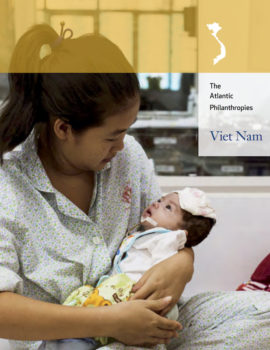
The Atlantic Philanthropies in Viet Nam
This book tells the story of Atlantic’s and our grantees’ impact and work in Viet Nam.
From 1998 - 2013, Atlantic invested $381.5 million in Viet Nam, primarily for libraries, universities and public health transformation.
Leveraging an additional $735 million from the country's government and other donors.
295 grants—nearly 200 were for health
940 commune health centers built or upgraded
9m people served by commune health centers in 8 provinces
More About Our Work
Explore results, research, and stories by clicking below
-
Population Health
Atlantic’s investments addressed factors affecting the health of a country’s population, including supporting quality training of medical personnel and encouraging supportive government policies.
-
Knowledge, Research & Innovation
Our grantmaking helped promote and generate sustainable scientific progress and improve outcomes for disadvantaged and vulnerable people.
-
Higher Education
We've supported the building and development of facilities for higher education at key centers of excellence and promise.
-
Health Equity
To achieve health equity, we are helping to identify, connect and prepare a generation of young leaders committed to driving systemic change in health care.


